

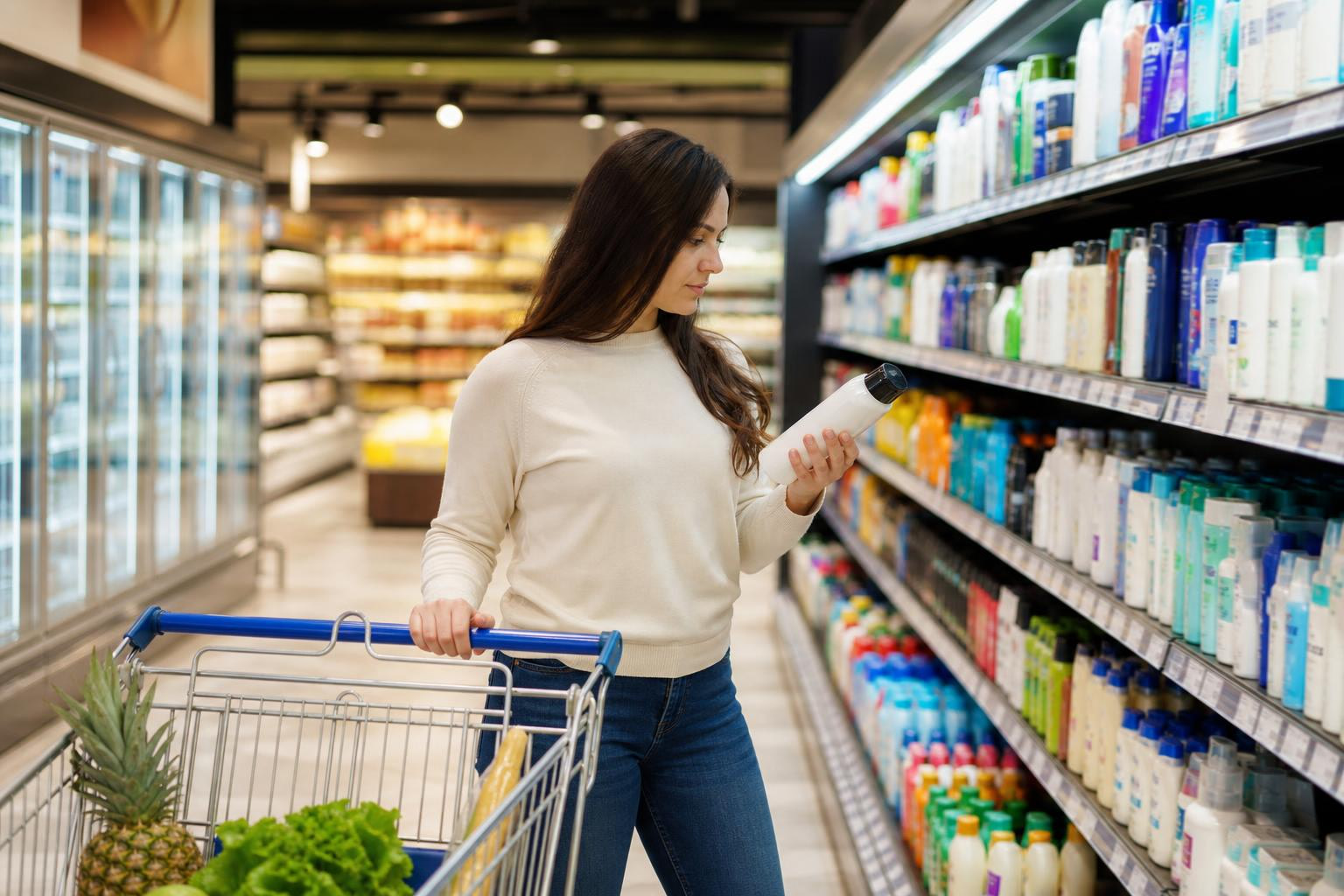
Consumer Packaged Goods (CPG): Categories & Trends 2026
TL;DR
Consumer packaged goods (CPG) are everyday products like food, toiletries, and cleaning supplies that people buy frequently, use up quickly, and replace on a regular cycle. The global CPG market was valued at roughly $5.47 trillion in 2024 and is projected to reach $7.8 trillion by 2033. For brands selling online, understanding how CPG economics work across Amazon, direct-to-consumer sites, and retail marketplaces is the difference between sustainable growth and slow margin erosion.
What Are Consumer Packaged Goods (CPG)?
Consumer packaged goods are products that consumers purchase regularly, use up or consume in a relatively short period, and then replace. Think toothpaste, laundry detergent, snack bars, shampoo, and paper towels. These are non-durable items, meaning they either get consumed immediately or have a useful life of less than three years.
A few characteristics define the category:
- High purchase frequency. People don’t buy toothpaste once a decade. They buy it every few weeks.
- Low unit cost. Most CPG products cost a few dollars per unit, which means buying decisions happen quickly with relatively little deliberation.
- Branded packaging. Shelf presence and brand recognition drive a huge share of purchase decisions, whether the shelf is physical or digital.
- Thin margins at scale. The constant demand creates steady revenue, but competition and low price points compress margins. Operational efficiency isn’t optional.
This stands in contrast to durable goods like cars, appliances, and furniture, which last for years, cost significantly more, and involve a much longer decision-making process. A consumer might spend weeks researching a washing machine. They spend seconds choosing a laundry detergent.
Get a free brand audit to see where your CPG brand stands across Amazon and D2C channels.
Main CPG Categories
The consumer packaged goods industry spans several major product categories, each with distinct dynamics around shelf life, purchase cycles, and competitive intensity.
Food and Beverage
This is the largest CPG category by a wide margin. Food accounts for roughly 43% of global CPG revenue, with beverages close behind. The range is enormous: fresh produce, dairy, frozen meals, snacks, cereals, bottled water, soft drinks, coffee, tea, and alcoholic beverages.
Major brands: Coca-Cola, PepsiCo, Nestlé, Mondelez International, General Mills.
Personal Care and Beauty
This category covers toiletries, cosmetics, skincare, hair care, fragrances, and hygiene essentials like soap and deodorant. It’s one of the fastest-growing CPG segments, driven heavily by social media discovery and D2C brands.
Major brands: L’Oréal, Estée Lauder, Colgate-Palmolive, Johnson & Johnson, Coty.
Household Products
Cleaning supplies, laundry detergent, dish soap, air fresheners, paper goods, and trash bags. These products compete on effectiveness, convenience, and price. Private label penetration is especially strong here.
Major brands: Procter & Gamble, The Clorox Company, Reckitt Benckiser, SC Johnson, Unilever.
Health and OTC Wellness
Over-the-counter pain relievers, vitamins, supplements, first-aid supplies, and digestive aids. This category has seen significant growth as consumers invest more in preventive health.
Major brands: Johnson & Johnson, Bayer, GSK Consumer Healthcare, Abbott.
Pet Care
Pet food, treats, grooming products, and supplements. Often overlooked in CPG discussions, but it’s a massive and growing segment with strong brand loyalty and recurring purchase patterns.
Major brands: Mars Petcare (Pedigree, Whiskas), Nestlé Purina, Blue Buffalo.
CPG vs. FMCG: What’s the Difference?
This distinction trips people up constantly. Here’s the clean version: FMCG (fast-moving consumer goods) is a subset of CPG, not a synonym for it.
All FMCGs are consumer packaged goods, but not all CPGs qualify as FMCG. The “fast-moving” label refers to products with the highest turnover rates, shortest shelf lives, and lowest per-unit costs. Deodorant, toilet paper, and milk are classic FMCGs. A premium skincare serum or artisanal hot sauce? Still CPG, but not necessarily fast-moving.
| Characteristic | CPG (Broad) | FMCG (Subset) |
|---|---|---|
| Purchase frequency | Regular | Very frequent |
| Shelf life | Varies | Short |
| Unit cost | Low to moderate | Low |
| Turnover rate | Moderate to high | Very high |
| Examples | Luxury cosmetics, specialty foods | Toothpaste, bread, soap |
There’s also a regional terminology split. In North America, industry professionals almost universally say “CPG.” Internationally, particularly in Europe and Asia, “FMCG” is the preferred term. They’re describing largely the same universe of products, with the FMCG label simply emphasizing the speed of inventory turnover.
Top CPG Companies by Market Capitalization
The consumer packaged goods industry is dominated by a handful of multi-hundred-billion-dollar corporations. The top publicly listed CPG companies by market cap tell the story of scale:
- Procter & Gamble ($374.5B) — Tide, Gillette, Pampers, Crest
- Coca-Cola ($292.5B) — Coca-Cola, Sprite, Dasani, Minute Maid
- L’Oréal ($251.5B) — Maybelline, Lancôme, Kiehl’s, Garnier
- Philip Morris ($251.5B) — Marlboro, IQOS
- Nestlé — Nescafé, KitKat, Gerber, Purina
- PepsiCo — Pepsi, Lay’s, Gatorade, Quaker
- Unilever — Dove, Hellmann’s, Ben & Jerry’s, Axe
- Colgate-Palmolive — Colgate, Palmolive, Hill’s Pet Nutrition
These companies built their empires through retail distribution at massive scale. Now, every one of them is racing to figure out ecommerce, direct-to-consumer channels, and digital advertising. That transformation is reshaping the entire industry.
CPG Market Size and Growth
The numbers confirm what most people intuitively understand: consumer packaged goods are one of the largest economic sectors on the planet.
- Global market size (2024): approximately $5.47 trillion
- Projected market size (2033): approximately $7.8 trillion
- Compound annual growth rate (2025–2033): 4.1%
- North America’s share: 34.68% of the global CPG market in 2025, driven by high purchasing power and consumer preference for convenience
One important nuance: recent growth has been fueled more by pricing than by volume. In 2022, U.S. CPG sales grew 8.4%, but that growth came almost entirely from price increases. Unit volumes actually declined. This pattern of price-driven growth without corresponding volume gains puts pressure on brands to prove value to increasingly cost-conscious shoppers.
The ecommerce share of CPG continues climbing. Online grocery penetration reached roughly 19% during peak months in late 2025. Understanding contribution margin at the unit level has become essential for any CPG brand selling through digital channels, where fees and advertising costs can quietly eat into that growth.
How CPG Brands Sell Online
The days when consumer packaged goods brands could rely entirely on retail shelf space are over. Today, three primary digital channels drive online CPG sales, and most successful brands use all of them.
Amazon and Marketplace Channels
Amazon held over 40.5% of U.S. ecommerce in 2025, according to eMarketer data. For CPG brands, it’s not just a sales channel but the discovery engine where millions of consumers search for everyday products.
As the Foodbevy podcast (a well-known CPG founder community) put it: if you’re a CPG founder in 2025, Amazon isn’t optional. It’s foundational. But selling on Amazon today looks nothing like it did even a year ago. Rising fees, shifting policies, and increasingly complex advertising are top-of-mind challenges for founders.
Many larger CPG brands now run hybrid models, blending first-party (1P vendor) and third-party (3P seller) strategies to balance control and reach. The right approach depends on your category, margins, and operational capacity. Brands looking for structured guidance on this can explore Amazon management and advertising services built specifically for this complexity.
Direct-to-Consumer (D2C)
The DTC market is projected to hit $319.6 billion in 2026, according to Business Research Insights. Major CPG companies like Unilever and Procter & Gamble have been actively acquiring DTC brands to protect market position and build first-party customer relationships.
D2C gives brands something marketplaces don’t: direct access to customer data, control over pricing and brand presentation, and higher gross margins (in theory). The tradeoff is that you’re responsible for driving your own traffic, managing fulfillment, and building conversion rate optimization into every page. For brands running both channels, syncing inventory across Amazon and Shopify becomes a critical operational requirement.
Retail Ecommerce and Grocery Platforms
Instacart, Walmart Marketplace, Kroger’s digital shelf, and Target’s same-day delivery create additional touchpoints. These channels matter especially for food, beverage, and household CPG categories where consumers expect fast, local fulfillment.
Food and beverage plus health, personal care, and beauty categories are projected to account for 20.9% of total ecommerce sales, and that figure is expected to grow 2.7 percentage points by 2028 as these “essentials” categories take share from electronics and home furnishings.
Key Challenges for CPG Brands in Ecommerce
Selling consumer packaged goods online looks straightforward from the outside. The reality is more complicated, and the margin for error is razor-thin.
Margin Compression from Fees
Practitioners on finance-focused ecommerce sites like eightx.co report that the real margin compression in 2024 through 2026 hasn’t come from headline referral fees. It’s come from surcharges, returns processing fees, and storage fee increases. FBA fulfillment fees rose about $0.08 per unit on average across standard sizes in January 2026 alone. If your Amazon margin feels worse year over year and your cost of goods hasn’t moved, storage and fulfillment surcharges are likely where the leak is.
This is exactly why regular fee audits matter. Brands that don’t actively track these changes end up paying more in Amazon fees than they realize.
Inventory Complexity
CPG products often have expiration dates, seasonal demand curves, and fast turnover requirements. On Amazon specifically, aged inventory fees punish slow-moving stock, while stockouts tank your Best Seller Rank and organic visibility. Planning restock schedules for fast-moving SKUs requires accurate demand forecasting and constant monitoring.
Brand Protection and Unauthorized Sellers
As one industry analysis from Pepperi noted, aggressive pricing atmospheres, counterfeits, and unauthorized sellers are among the primary reasons some brands hesitate to sell directly on Amazon. The Buy Box can flip between sellers unpredictably, and counterfeit listings damage brand trust. Practitioners on Reddit and ecommerce forums consistently highlight brand protection as an underestimated operational burden for CPG sellers.
For brands already dealing with this, escalating IP infringements on Amazon is a practical first step.
Advertising Complexity Across Channels
Running Amazon PPC, Google Performance Max, and Meta Advantage+ campaigns simultaneously creates a measurement and optimization challenge that few small teams can handle well. Each platform has its own attribution model, bidding logic, and creative requirements. Without unified governance, brands end up with overlapping spend, inconsistent messaging, and no clear picture of what’s actually driving profitable sales.
Listing Compliance and Suppression
Amazon regularly suppresses listings for policy violations, sometimes without clear explanation. For CPG products, this can involve ingredient claims, product safety documentation, or packaging requirements. A suppressed listing during a peak sales period can cost thousands in lost revenue. Knowing how to fix suppressed listings quickly is a survival skill for CPG sellers on Amazon.
CPG Industry Trends Shaping 2025 and Beyond
AI Is Moving from Buzzword to Operational Tool
According to a 2025 McKinsey survey, 71% of CPG industry leaders have integrated AI into at least one business function, with demand forecasting leading the charge. AI-driven inventory planning, personalized marketing, and dynamic pricing are no longer experimental. They’re competitive necessities.
Personalization Drives Conversion
The data is striking: 81% of consumers ignore irrelevant marketing messages, and 96% say personalized messages from brands make them more likely to purchase. For CPG brands, this means generic mass-market messaging is increasingly ineffective. First-party data from D2C channels becomes the fuel for the kind of personalization that actually moves product.
Private Label Competition Is Intensifying
Store-brand sales have increased by $10.1 billion since 2022, reaching an all-time high according to the 2025 Private Label Report. Retailers are investing heavily in their own brands, and consumers are increasingly open to switching from name brands. CPG companies that compete on brand equity alone, without operational efficiency and compelling digital experiences, will keep losing shelf share.
Video Discovery Is Reshaping How Consumers Find Products
Younger consumers increasingly turn to YouTube, TikTok, and Instagram to discover and evaluate products before buying. From taste tests and recipe videos to supplement reviews and cleaning hacks, video platforms have become a primary CPG discovery channel. This shift means brands need to think about video content not as a nice-to-have but as a core part of their awareness funnel.
The D2C and Marketplace Hybrid Is Standard
Major CPG brands no longer debate “Amazon or D2C.” They run both, along with retail ecommerce partnerships. The hybrid model uses marketplaces for reach and volume, D2C for margin and data, and retail partners for local fulfillment. The challenge is executing this without fragmenting your operations, analytics, or brand experience. Building a profitable D2C scaling strategy alongside marketplace presence is how modern CPG brands compound growth.
Why CPG Matters for Ecommerce Sellers
Consumer packaged goods represent arguably the most attractive and the most punishing category in ecommerce simultaneously.
The attractiveness is obvious: consistent demand, recurring purchases, and a massive addressable market approaching $8 trillion globally. Unlike discretionary electronics or fashion, CPG products don’t disappear during recessions. People still buy soap and snacks.
The punishment comes from the margins. Low per-unit prices mean every penny of fulfillment cost, advertising spend, and platform fee matters. The brands that win in CPG ecommerce aren’t the ones with the biggest budgets. They’re the ones with the tightest operations: optimized listings, disciplined ad architecture, accurate inventory planning, and a clear view of how to scale without losing margin.
If your CPG brand is generating revenue but struggling with profitability, fragmented operations, or unclear channel economics, a free brand audit can surface the specific gaps and build a 90-day action plan to address them.
Frequently Asked Questions
What does CPG stand for?
CPG stands for consumer packaged goods. It refers to products that are purchased frequently, consumed or used up quickly, and replaced on a regular basis.
What are examples of CPG products?
Common examples include toothpaste, laundry detergent, potato chips, bottled water, shampoo, diapers, paper towels, dog food, pain relievers, and cosmetics. Essentially, most of what you’d find in a grocery store or drugstore qualifies.
Is CPG the same as FMCG?
Not exactly. FMCG (fast-moving consumer goods) is a subset of CPG that focuses specifically on the fastest-selling, lowest-cost, shortest-shelf-life products. All FMCGs are CPGs, but not all CPGs are FMCGs. In North America, “CPG” is the standard term. Internationally, “FMCG” is more common.
How big is the CPG market?
The global consumer packaged goods market was valued at approximately $5.47 trillion in 2024 and is projected to reach $7.8 trillion by 2033, growing at a CAGR of 4.1%.
How do CPG brands sell on Amazon?
CPG brands sell on Amazon either as first-party vendors (1P, selling wholesale to Amazon) or third-party sellers (3P, selling directly to consumers through Amazon’s marketplace). Many brands use a hybrid of both approaches. Success requires optimized product listings, structured PPC campaigns, inventory planning around FBA requirements, and active brand protection.
Why are CPG margins so thin on Amazon?
Beyond the inherently low unit prices, Amazon’s referral fees, FBA fulfillment fees, storage fees, and advertising costs all compress margins. Fee increases in 2025 and 2026 have been incremental but cumulative. Brands that don’t audit their fee structures regularly often discover that rising costs, not declining sales, are the real source of margin erosion.
What is the biggest CPG category?
Food and beverage is the largest consumer packaged goods category, representing approximately 43% of global CPG revenue. Beverages are the second-largest segment within the broader category.
What trends are shaping the CPG industry in 2025?
Key trends include AI-driven demand forecasting, the shift toward D2C and hybrid distribution models, growing private label competition, video-first product discovery among younger consumers, and increasing consumer demand for personalization and transparency.